For a while, it seemed settled. Remote work had won. Laptops migrated to kitchen tables, spare bedrooms became offices, and the idea of commuting began to feel almost archaic. Productivity held, meetings moved online, and many professionals enjoyed the freedom of working entirely on their own terms.
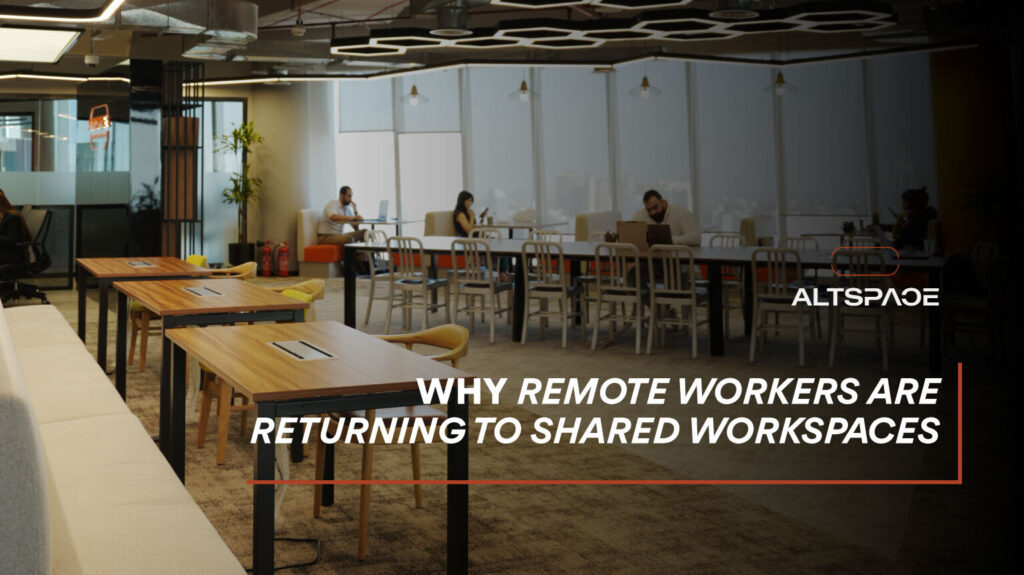
Yet something quieter has been happening beneath the surface. Across cities, shared workspaces are filling up again, not with corporate teams forced back by policy, but with independent professionals who chose remote work in the first place. Designers, developers, consultants, founders, writers. People who could stay home, but no longer want to do so all the time.
The reasons are less about desks and Wi-Fi, and more about how work feels when it is done in isolation for too long.
The Limits of Working Alone
Remote work solved many practical problems, but it quietly introduced others that took time to surface. Many workers describe the early months at home as liberating, followed by a gradual sense of blur. Days lost structure. Weeks blended together. Without noticing, some found themselves working longer hours, not fewer, because there was no clear boundary between effort and rest.
Many people are surprised to learn how much mental energy goes into simply starting work. At home, that starting point is vague. The transition from personal space to professional focus often lacks friction, and paradoxically, that makes it harder, not easier, to engage deeply.
Shared workspaces reintroduce that transition in a subtle way. Leaving the house, entering a neutral environment, and sitting down with intention signals the brain that a different mode is required. It is not about supervision or pressure. It is about clarity.
Focus as an Environmental Effect
Focus is often discussed as a personal discipline, but environment plays a significant role. Noise levels, lighting, movement, and even the posture encouraged by a space influence how long and how well someone can concentrate.
Home offices are rarely designed with sustained cognitive work in mind. Chairs are chosen for convenience, not ergonomics. Lighting is incidental. Interruptions, even small ones, accumulate. Over time, these factors create a background strain that shows up as fatigue rather than distraction.
In contrast, shared workspaces are engineered for attention. The design choices are intentional, from desk height to acoustic treatment. The result is not silence, but a controlled hum that supports concentration without demanding it.
Remote workers returning to these environments often report a specific shift. They complete complex tasks faster, with less mental resistance. The work feels contained, rather than spilling into the rest of the day.
The Psychological Weight of Visibility
One of the most underestimated aspects of shared spaces is gentle accountability. Not performance monitoring, but the simple awareness that others are working alongside you.
This visibility changes behavior in subtle ways. People are more likely to take proper breaks instead of drifting between tabs. They tend to start on time and finish deliberately. The presence of others creates a shared rhythm that supports consistency.
Importantly, this is not about competition. Most shared workspaces are populated by people in entirely different fields. The value lies in mutual recognition. You are not working alone in the world, even if your project is independent.
For many remote professionals, this sense of being part of a working ecosystem reduces the emotional weight of long-term solo work.
Loneliness, Reframed
Loneliness in remote work is often misunderstood. It is not always about missing conversation. Many remote workers communicate all day through messages and calls. The issue is deeper. It is the absence of shared context.
Working alone removes casual, unstructured interactions, the moments that do not require an agenda. Over time, this can make work feel transactional rather than human.
Shared workspaces restore this layer without forcing socialization. A nod at the coffee machine, overhearing someone troubleshoot a problem, a brief exchange about a deadline. These moments remind people that work is a collective human activity, even when the output is individual.
The key difference is choice. In a shared workspace, interaction is available but optional. This balance is precisely what many remote workers find sustainable.
Structure Without Rigidity
Traditional offices imposed structure through schedules and oversight. Remote work removed most of that structure, sometimes entirely. Shared workspaces offer a middle ground.
The structure comes from the space itself, not from rules. Opening hours define the workday without enforcing it. The layout encourages focus zones and rest zones, signaling when to push and when to pause.
Many professionals returning to shared spaces use them strategically. Two or three days a week, dedicated to deep work. The remaining days at home, reserved for flexible tasks. This hybrid rhythm allows people to benefit from structure without sacrificing autonomy.
Creativity Through Proximity
Creative work thrives on exposure to different ways of thinking. Remote environments tend to narrow that exposure. Algorithms show us more of what we already know. Conversations become task-focused.
In shared workspaces, proximity creates low-stakes creative stimulation. Seeing how others organize their day, overhearing a discussion about a challenge outside your field, or simply working near people with different energy can spark ideas unexpectedly.
This is especially relevant for freelancers and founders, whose work often lacks external creative input. Shared environments provide that input passively, without the need for formal collaboration.
Health, Routine, and the Body
Health considerations are also driving the return. Working from home often leads to reduced movement. Commutes disappear, but so do incidental walks, posture changes, and natural breaks.
Shared workspaces encourage a more embodied workday. Walking to the space, changing environments, sitting properly, standing during calls, stepping outside for breaks. These small physical cues accumulate into better energy levels and reduced strain.
Over time, many remote workers notice fewer headaches, improved sleep patterns, and clearer separation between work and rest when part of their week is spent outside the home.
Choosing the Right Shared Environment
Not all shared workspaces serve the same purpose. Remote workers returning to them tend to be selective. The goal is not density, but alignment.
When evaluating a space, experienced professionals often look for:
- Clear zoning between quiet work areas and social areas
- Consistent noise management rather than enforced silence
- Ergonomic furniture and natural light
A culture that respects focus as much as connection
The best spaces support work without trying to define it.
A Recalibration, Not a Reversal
The return to shared workspaces does not signal the failure of remote work. It signals its maturation. Professionals are no longer reacting to old systems, they are designing new ones that reflect how they actually function.
Remote work remains central. The difference is that many people now recognize the value of choosing where work happens, not defaulting to a single location out of habit.
Shared workspaces are becoming tools rather than obligations. Places used intentionally, at moments when focus, structure, and human presence matter most.
In that sense, the shift is not backward. It is more precise.
